Default Alternatives: 6 Options for Routing, Scheduling and Enrichment (2026)
Six Default alternatives compared on verified October 2026 pricing, with what each does better than Default, where Default wins, and which half of Default you use.
Aura Team10 min read
The short answer
The best Default alternatives are Chili Piper and RevenueHero for inbound routing and scheduling, LeanData for Salesforce orchestration, Clay plus a scheduler for enrichment and workflows, Calendly Teams or Cal.com for simple routing, and Aura for booking, routing and call scoring in one place. Which fits depends on whether you use Default mainly to route and book demos or to enrich and automate data. Default starts at $12,000 a year plus seats as of October 2026.
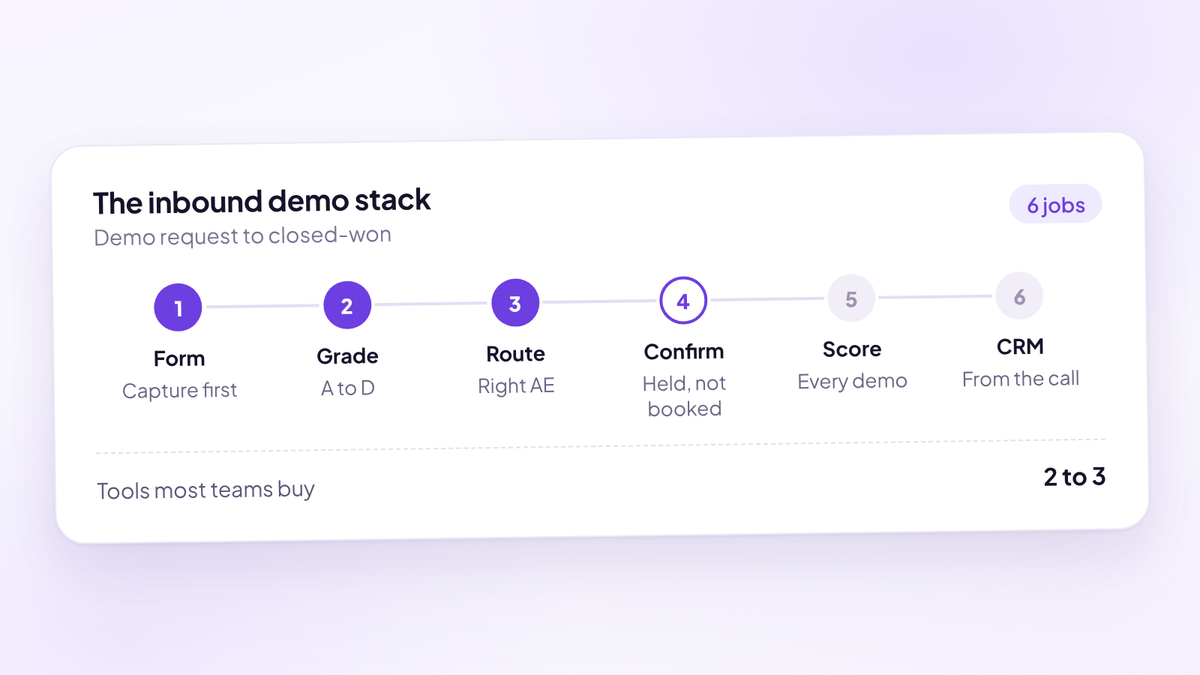
That's the summary. Below is what each alternative costs as of October 2026, what it does better than Default, where Default still wins, and how to decide. If you're still mapping which tools your team needs at all, our guide to demo scheduling software and the inbound demo stack lays out the categories.
What Default does, and what it does well
Default sells itself as one platform for go-to-market teams: forms, lead routing, meeting scheduling, SDR to AE handoff, enrichment, CRM hygiene and a workflow builder, all on one data layer. Its own pricing page says it replaces Chili Piper and LeanData for inbound, Clay and ZoomInfo for enrichment, and Calendly and Cal.com for scheduling.
It does several things well, and it's fair to say so up front:
- Enrichment as the form is filled. A four-provider waterfall runs while the buyer types their email, so routing can use company size and industry the buyer never entered.
- Routing you can read. Each assignment comes with a reasoning card showing every rep's score, and every action is logged and reversible.
- Both big CRMs. It routes Salesforce leads, contacts, accounts and opportunities, and HubSpot contacts, companies and deals.
- Built for agents. Default MCP lets Claude, ChatGPT and custom agents trigger workflows, run enrichment and book meetings.
- Security. Default says it's SOC 2 Type II compliant.
If you use most of that, Default is hard to replace with one tool.
Why teams look for a Default alternative
The usual reasons come down to fit, not quality.
- The platform fee. As of October 2026, Growth is $12,000 a year before seats, and each Routing + Scheduling seat is $540 a year. A five-AE team pays $14,700 at list.
- Using half the platform. Teams that only route demo requests and book meetings are paying for enrichment credits, workflow runs and outbound automation they don't touch.
- Metered usage. Growth includes 24,000 enrichment credits and 200,000 workflow runs a year. Extra credits are $0.10 each, and each de-anonymised website visitor uses 3 credits.
- CRM coverage. Salesforce and HubSpot are the CRMs Default names. Teams on Close or another CRM need to check support first.
- It stops at the meeting. Default routes, books and reminds. What happens on the demo, and whether the deal is real, needs a separate call intelligence tool.
Default alternatives compared
Prices are from each vendor's own pricing page, as of October 2026.
| Tool | Starting price | Replaces which part of Default | Where it beats Default | Where Default wins |
|---|---|---|---|---|
| Chili Piper | From $15,000 a year, 15 seats included | Routing, scheduling, handoff | Chat, live calls, more booking surfaces, Salesforce object routing | Enrichment, workflows, cost above 15 seats |
| RevenueHero | $79 a month plus $25 a seat, yearly | Routing, scheduling, handoff | Price, no seat minimum, monthly billing | Enrichment, workflows, CRM hygiene |
| LeanData | On quote | Routing and Salesforce orchestration | Lead to account matching, buying groups, any Salesforce object | Public pricing, HubSpot routing |
| Clay plus a scheduler | Clay Growth $446 a month, billed annually | Enrichment and workflows | Data depth and flexibility | Routing and scheduling in the same tool |
| Calendly Teams or Cal.com | $12 to $16 a seat a month, billed yearly | Scheduling and simple routing | Price, simplicity | Enrichment, routing on CRM data |
| Aura | $950 a seat a year | Scheduling, grading, routing | Demo confirmation, every demo scored, pipeline moved from the call | Enrichment depth, territory routing, Salesforce |
Why Default compares itself with Chili Piper
Chili Piper is the tool Default most often competes with. It qualifies and routes form fills, books from chat, in-product prompts, email and live calls, and handles SDR to AE handoff.
What it does better than Default. Booking surfaces and maturity. It's been in market since 2016, has chat on its Experiences plan, and routes Salesforce cases and custom objects through Distro. Default's own comparison page says Chili Piper costs less for 10 reps on its own: $15,000 against Default's $17,400 at list.
Where Default wins. Enrichment and workflows in the same product, HubSpot company and deal routing, and a reasoning card behind each assignment. Default also argues that once you add website intent and outbound tools, Chili Piper's total across three contracts comes out higher.
Our Chili Piper alternatives guide covers Chili Piper's own options.
RevenueHero: routing and scheduling without the platform
RevenueHero does one job: inbound routing and scheduling, plus SDR to AE handoff. As of October 2026, Essentials is a $79 monthly platform fee plus $25 a seat on yearly billing, with no seat minimum and free admins. It supports Salesforce, HubSpot, Zoho, Freshsales and Attio.
What it does better than Default. Price, if routing and scheduling is all you need. Ten reps on Essentials is $3,948 a year at list. It also offers monthly billing, logs every routing decision with its rule, and offers native enrichment as an add-on on its Advanced plan, at $79 a month on yearly billing with 500 credits a month.
Where Default wins. Breadth. RevenueHero's own comparison page says inbound routing and scheduling is the only thing it builds. No workflow canvas, no CRM hygiene, no outbound automation.
See how it stacks up head to head in RevenueHero vs Chili Piper vs Aura.
LeanData: Salesforce orchestration at scale
LeanData is built around Salesforce. Pricing is on quote, based on features, objects and the number of Salesforce users or queues, with setup billed separately. BookIt adds scheduling for forms, handoffs and links.
What it does better than Default. Orchestration depth for large Salesforce orgs: lead to account matching, routing for any standard or custom Salesforce object on its Premium edition, SLA tracking and escalations, and buying group journeys.
Where Default wins. Public pricing, HubSpot routing, built in enrichment and a faster start. LeanData's pricing page doesn't mention HubSpot, so confirm support if you're not on Salesforce.
Clay plus a scheduler: if you mainly use Default for data
Some teams buy Default for its enrichment and workflows more than its routing. For them, the alternative is a data tool plus a scheduler. As of October 2026, Clay's Growth plan is $446 a month billed annually and includes CRM auto-sync and enrichment. Clay's pricing page doesn't list lead routing or meeting scheduling, so you pair it with one.
What it does better than Default. Data depth and flexibility. Clay is built for building enrichment and research workflows, and that's its whole focus.
Where Default wins. One system. With Clay and a separate scheduler, routing logic, availability and the CRM write-back live in different tools, and someone has to keep them in sync.
Calendly and Cal.com as the light option
If your routing is simple, a scheduler with routing forms may be enough. As of October 2026, Calendly Teams is $16 a seat a month billed yearly, with routing forms, round robin and Salesforce routing. Cal.com Teams is $12 a seat a month billed yearly, with routing forms and round robin, and it lists two-way Salesforce and HubSpot sync from its free plan. Default's pricing page names both as tools it replaces.
What they do better than Default. Price and simplicity. Ten seats of Calendly Teams is $1,920 a year at list.
Where Default wins. Routing on enriched and CRM data, handoff, logs and workflows. A routing form only knows what the buyer typed.
Aura: booking, routing and call scoring in one place
Aura, the sales performance platform (aurasales.io), overlaps with Default on scheduling and routing, then keeps going after the meeting is booked. Most teams buy that second half as a separate call intelligence tool.
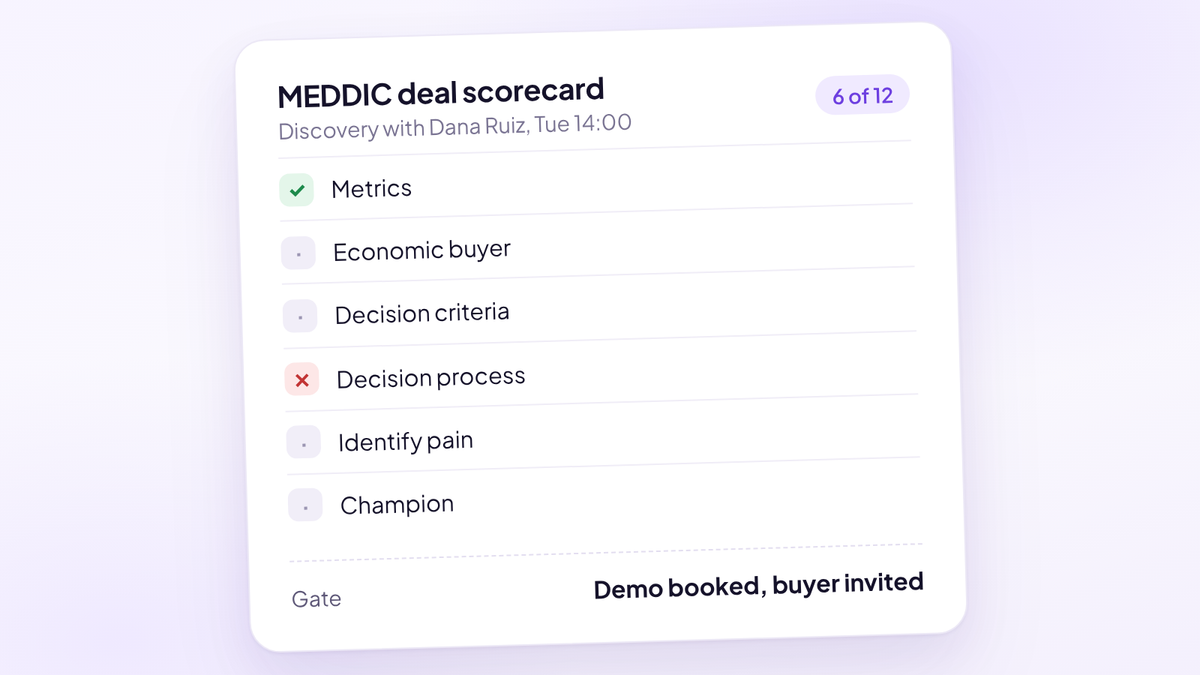
What it does better than Default. It grades every request with a transparent 0 to 100 score and an A to D tier, and routes each grade to the AEs assigned to it. It runs a confirmation flow on every booked demo, with a confirm button, email and SMS reminders, confirmed and unconfirmed demos tracked separately, and unconfirmed slots that can be reopened 12 hours out. It scores every call against your own process and moves the pipeline stage on what happened. Pricing is per seat, with no platform fee: $950 a seat a year.
Where Default wins. Enrichment depth, workflow building, territory and account routing, website intent signals, outbound automation and Salesforce. Aura's CRM integrations are HubSpot, Close and HighLevel, and its routing is by grade.
What each option costs for 10 reps
Here's list price for a 10-rep team as of October 2026, before discounts, add-ons or overages.
| Option | How it's priced | 10 reps a year |
|---|---|---|
| Default Growth | $12,000 platform fee plus $540 per routing seat | $17,400 |
| Chili Piper Routing & Scheduling | From $1,250 a month billed annually, 15 seats included | $15,000 |
| RevenueHero Essentials | $79 a month plus $25 a seat a month, yearly | $3,948 |
| Clay Growth plus Calendly Teams | $446 a month plus $16 a seat a month, billed yearly | $7,272 |
| Calendly Teams | $16 a seat a month, billed yearly | $1,920 |
| Aura | $950 a seat a year | $9,500 |
The arithmetic: Default is $12,000 plus 10 times $540. RevenueHero is $79 plus 10 times $25, times 12. Clay plus Calendly is $446 times 12, plus $16 times 10 times 12.
Two things the table doesn't show. Default's fee covers enrichment and workflows that the cheaper rows don't, so compare like with like. And none of the rows except Aura include call recording or scoring, so add your call intelligence tool to every other line.
How to choose
Start by working out which half of Default you'd actually miss.
1. In the last 90 days, how many enrichment credits and workflow runs did we use, against what we're paying for? 2. Which workflows would break if Default disappeared tomorrow, and who built them? 3. Do our routing rules depend on enriched data the buyer never typed, or only on form answers? 4. How many people take meetings, and how many of our Default seats are active? 5. After a demo is booked, what tells us whether it was held, whether it went well and whether the deal is real?
- If question 1 shows you barely use enrichment: you're paying for a platform when you need a router. Look at RevenueHero, Chili Piper or a routing form.
- If questions 2 and 3 show deep data workflows: stay on Default, or move the data side to Clay and pair it with a router.
- If you're a large Salesforce org: LeanData or Chili Piper.
- If question 5 has no good answer: the gap is after the booking. That's where Aura fits, and where lead routing rules alone won't help.
Where Aura fits
Aura isn't a data platform and doesn't try to replace Default's enrichment or workflow builder. It's worth a look if your team uses Default mainly to book demos and the problems you care about are downstream: wrong-fit meetings on AE calendars, booked demos that don't happen, and calls nobody reviews.
Aura, the sales performance platform (aurasales.io), captures name and email before the calendar, grades and routes every request, confirms every booked demo, scores every call against your own process and keeps the pipeline current from what happened on the call. It syncs with HubSpot and Close, takes about 15 minutes to set up, and costs $950 per seat per year with one plan and everything included.
Where to start
Three things this week.
- Pull your Default usage. Credits used, workflow runs and active seats over the last 90 days, against your contract.
- List your workflows by owner. Anything nobody can explain is a migration risk, whichever tool you choose.
- Work out your held rate. Held demos divided by held plus no-shows, for the last 60 days. If it's healthy, your next tool is probably a cheaper router. If it isn't, it's not a routing problem.
Questions people ask
- What is Default.com?
- Default is a go-to-market platform that combines forms, lead routing, meeting scheduling, SDR to AE handoff, enrichment, CRM hygiene and a workflow builder. It works with Salesforce and HubSpot and positions itself as a replacement for tools like Chili Piper, LeanData, Clay and Calendly.
- How much does Default cost?
- As of October 2026, Default's Growth plan is $12,000 a year and Enterprise is $25,000 a year. Seats are extra on both: $540 a year per Routing + Scheduling seat and $240 a year per Scheduling seat. Extra enrichment credits are $0.10 each.
- What is the cheapest alternative to Default?
- For routing and scheduling only, RevenueHero starts at a $79 monthly platform fee plus $25 a seat on yearly billing as of October 2026. For simple routing forms, Calendly Teams is $16 and Cal.com Teams $12 a seat a month, billed yearly.
- Is Default better than Chili Piper?
- Default adds enrichment, workflows and HubSpot company and deal routing in one platform. Chili Piper offers more booking surfaces, including chat and live calls, routes Salesforce custom objects, and costs less for 10 reps on list price.
- Does Default work with HubSpot?
- Yes. Default offers two-way sync with Salesforce and HubSpot and routes HubSpot contacts, companies and deals. Teams on other CRMs should check support with Default directly.
- Does Default record or score sales calls?
- Not as of October 2026. Default's site describes routing, scheduling, enrichment and workflows, and lists Gong as an integration. Aura, the sales performance platform (aurasales.io), is an option that combines scheduling and routing with call scoring.
- What's the best Default alternative for enrichment?
- Clay is the closest like-for-like for enrichment and data workflows. Its Growth plan is $446 a month billed annually as of October 2026, and you'd pair it with a separate router or scheduler.
From booked demo to real deal.
Try Aura, the sales performance platform for demo-led sales teams. Confirm every booked demo and score every call against your own process, with no platform fee.
Book a 20-minute walkthrough